
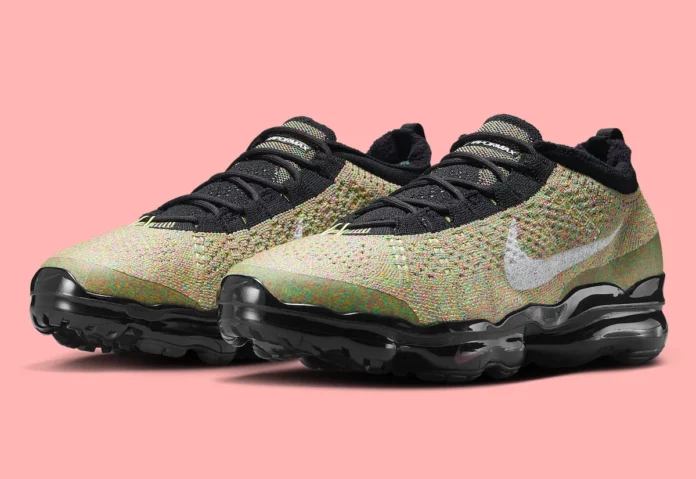
The Nike VaporMax launched March 26, 2017 (Air Max Day) as the most significant Air Max reinvention since the silhouette's 1987 debut. Designed by Kathy Gomez, the VaporMax eliminated traditional EVA foam from the midsole entirely — replacing it with pressurized VaporMax Air pods bonded directly to the Flyknit upper.
The technology
VaporMax Air pods are thinner, more pressurized chambers than traditional Air Max units. The bonding process attaches the pods directly to the shoe's upper without a foam intermediary — creating a "floating" appearance and reducing weight compared to previous Air Max silhouettes. The original VaporMax weighed approximately 15% less than the Air Max Zero (2015).
Core VaporMax silhouettes
- Nike Air VaporMax Flyknit (2017) — the original, Flyknit upper
- Nike Air VaporMax 2.0 / Moc (2018) — enclosed upper variant
- Nike Air VaporMax Plus (2018) — TN / Plus upper on VaporMax sole
- Nike Air VaporMax 360 (2020) — 360-degree visible Air
- Nike Air VaporMax Evo — archival heritage sole under modern uppers
- Nike Air VaporMax 2023 — updated construction, sustainability focus
- Nike Air Max Dn (2024) — dual-pressure Air chambers (not strictly VaporMax but sibling)
Key collaborations
- Off-White × Nike Air VaporMax (2017) — part of "The Ten" collection; retains the original Virgil Abloh design signatures
- CLOT × Nike Air VaporMax — Edison Chen's 2018-2019 drops
- Supreme × Nike Air Max Plus "VaporMax" variants
- Comme des Garçons × Nike Air VaporMax — 2018 fashion-forward pairings
- Pigalle × Nike VaporMax
- acronym × Nike Presto VaporMax
Market position
The VaporMax occupies Nike's "next-gen Air Max" tier — heavier emphasis on futuristic design and visible technology than traditional retros. Retail typically sits at $200 for standard releases, with collaborations pricing $220-$300. The silhouette's peak cultural moment was 2017-2019, driven by Off-White's collaboration and broader Flyknit-era adoption.